


Presented by Useful Objects

Book Launch & Talk
at Melbourne Design Week,
16 May 2—3pm
at Melbourne Design Week,
16 May 2—3pm
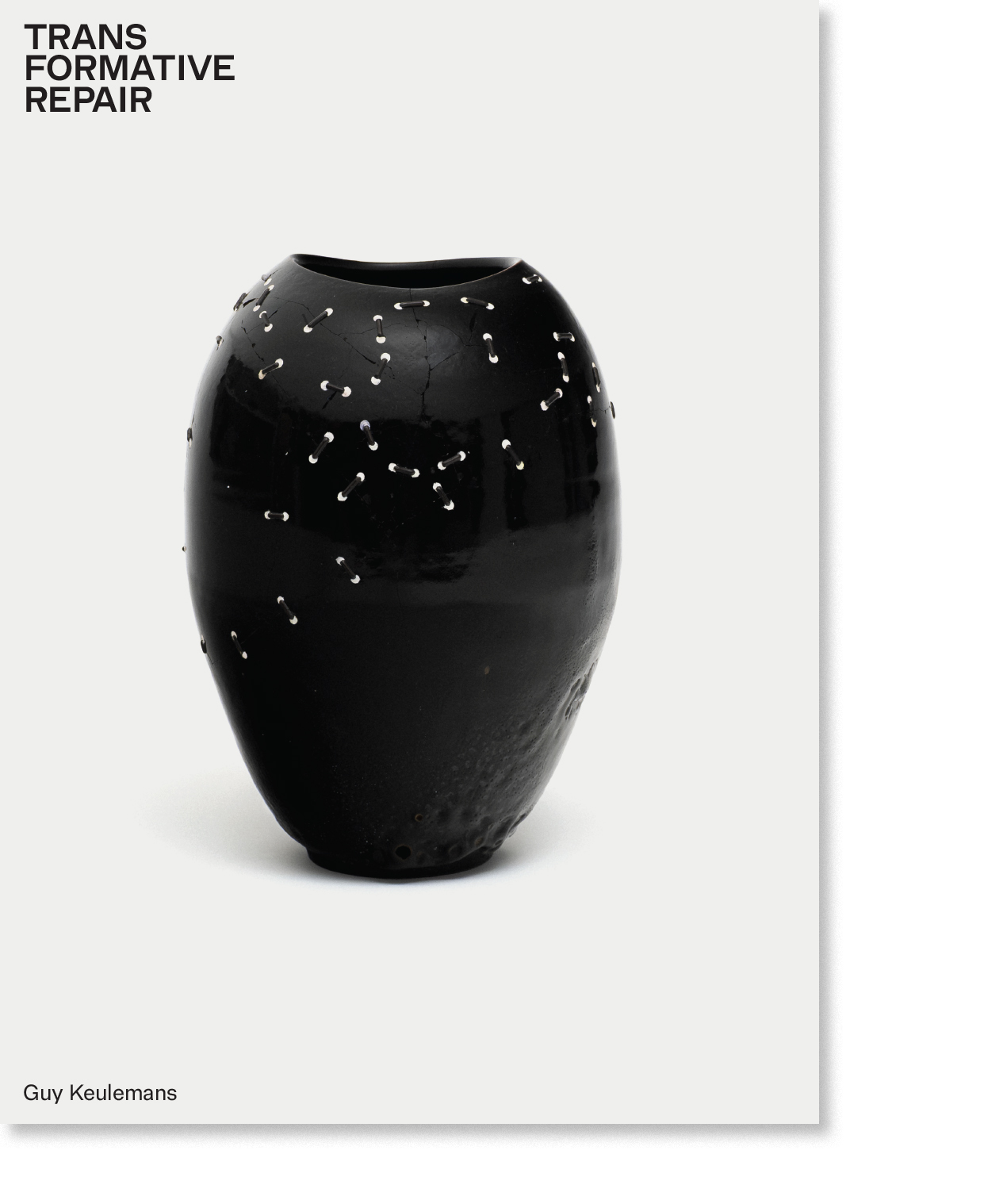
The world is in a waste crisis. Each year Australia alone generates 75 million tonnes of waste—much of it broken goods that are repairable, but discarded anyway. Transformative Repair makes an urgent, visually rich case that designers and craftspeople are uniquely positioned to respond: not by bringing objects back to
their original condition, but by reimagining them entirely.
Drawing on a decade of participatory design research, designer Guy Keulemans documents a series of ambitious collaborative projects conducted across institutions including the Australian Design Centre, JamFactory, and Design Tasmania. From Japanese lacquerware masters repairing Western ceramics to contemporary jewellers encasing cake mixers in concrete, from traditional kintsugi to digital and virtual repair, the works collected here demonstrate the full creative and ethical scope of what repair can be.
Transformative Repair is both a scholarly argument and a practical guide. It charts how skilled professionals—trained in the transformation of raw materials—can redirect their expertise towards the revival of damaged and obsolete objects: furniture, homewares, textiles, electronics. In doing so, they challenge the logic of a linear economy built on breakage and replacement, and propose a compelling alternative: a culture of conservation, care, and creative transformation.
Featured artists and designers include Jane Bowden, David Caon, Andrew Carvolth, Adam Goodrum, Benja Harney, Kyoko Hashimoto, Trent Jansen, Peta Kruger, Kay Lawrence, Lucy McRae, Tom Moore, Johnny Nargoodah, Blanche Tilden and the Campana Brothers.
The book Transformative Repair launches May 16 with a panel talk, to coincide with the opening of Transformative Repair x Useful Objects at Melbourne Design Week.
Presented by Useful Objects
Book Launch & Talk
at Melbourne Design Week,
16 May 2—3pm
at Melbourne Design Week,
16 May 2—3pm
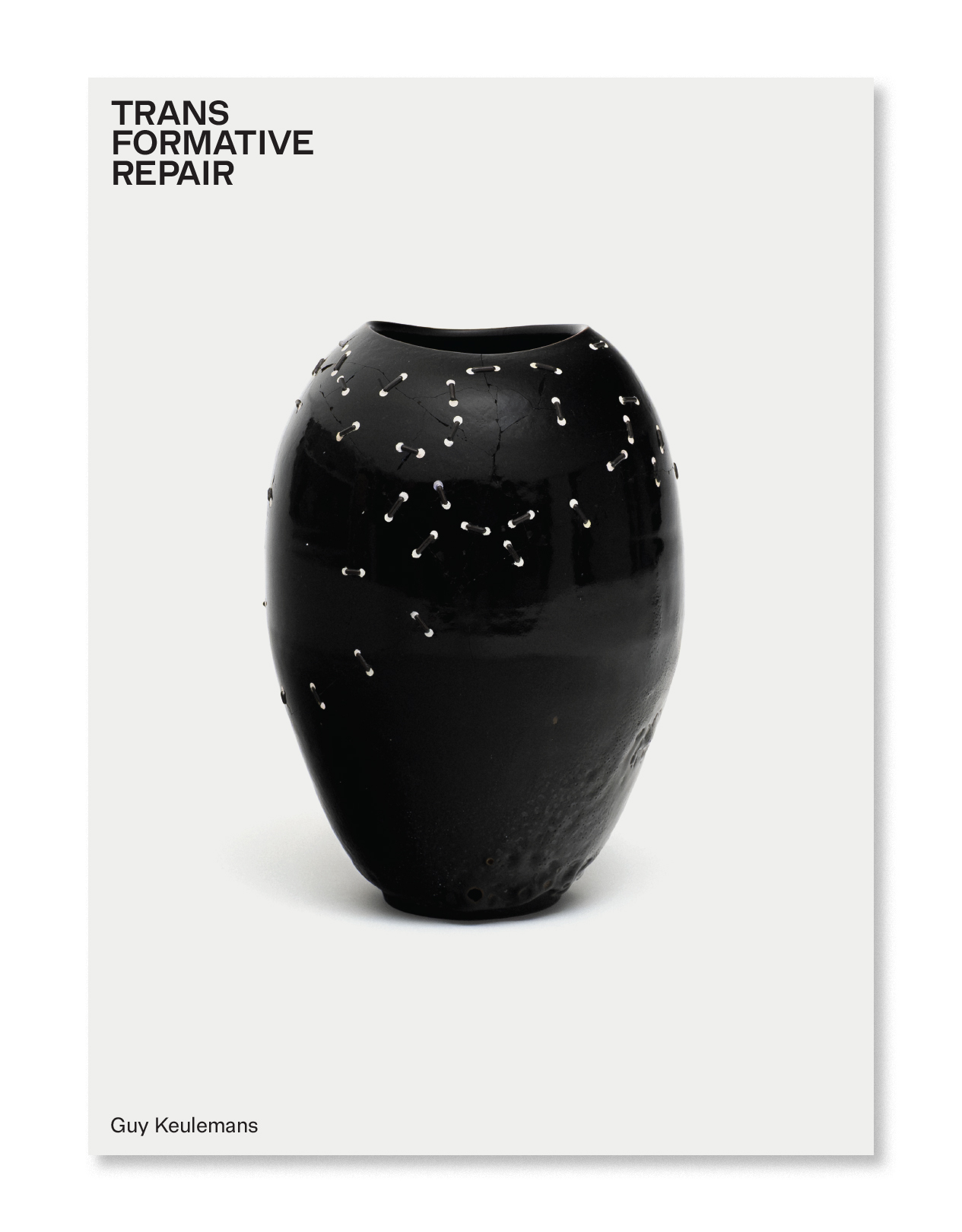
The world is in a waste crisis. Each year Australia alone generates 75 million tonnes of waste—much of it broken goods that are repairable, but discarded anyway. Transformative Repair makes an urgent, visually rich case that designers and craftspeople are uniquely positioned to respond: not by bringing objects back to
their original condition, but by reimagining them entirely.
Drawing on a decade of participatory design research, designer Guy Keulemans documents a series of ambitious collaborative projects conducted across institutions including the Australian Design Centre, JamFactory, and Design Tasmania. From Japanese lacquerware masters repairing Western ceramics to contemporary jewellers encasing cake mixers in concrete, from traditional kintsugi to digital and virtual repair, the works collected here demonstrate the full creative and ethical scope of what repair can be.
Transformative Repair is both a scholarly argument and a practical guide. It charts how skilled professionals—trained in the transformation of raw materials—can redirect their expertise towards the revival of damaged and obsolete objects: furniture, homewares, textiles, electronics. In doing so, they challenge the logic of a linear economy built on breakage and replacement, and propose a compelling alternative: a culture of conservation, care, and creative transformation.
Featured artists and designers include Jane Bowden, David Caon, Andrew Carvolth, Adam Goodrum, Benja Harney, Kyoko Hashimoto, Trent Jansen, Peta Kruger, Kay Lawrence, Lucy McRae, Tom Moore, Johnny Nargoodah, Blanche Tilden and the Campana Brothers.
The book Transformative Repair launches May 16 with a panel talk, to coincide with the opening of Transformative Repair x Useful Objects at Melbourne Design Week.
AUTHOR
Guy Keulemans
BOOK DESIGN
Baron Chau & Guy Keulemans
TYPESETTING & LAYOUT
Baron Chau
PUBLISHER
Uro Publications, Melbourne, 2026
The Transformative Repair team acknowledges the First Nations custodians of the lands upon which the project was conducted.

Transformative Repair is a UniSA led Australian Research Council project funded by the Australian Government in collaboration with the following organisations: